 OneClickGrowth
Beyond the Keywords: Navigating the New Era of AI SEO and Generative Engine Optimization
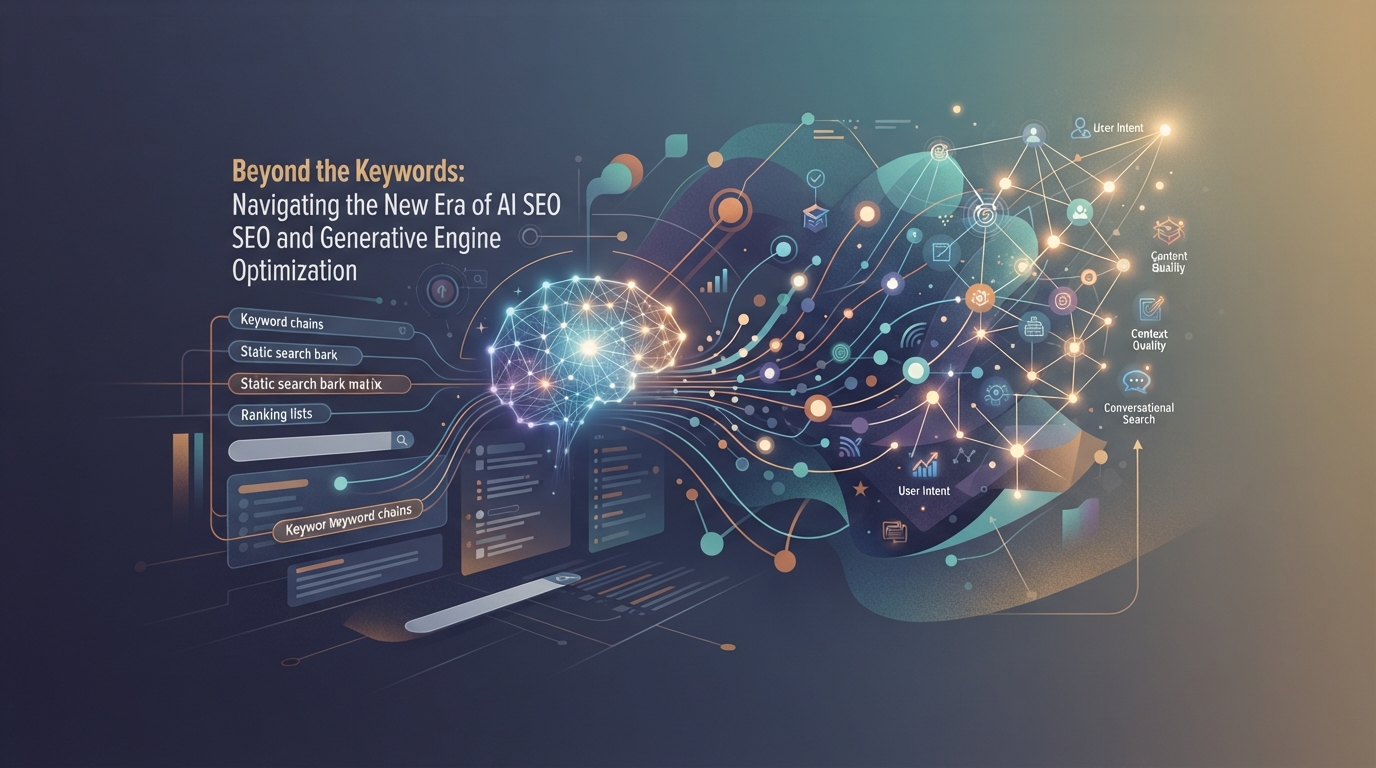
Search query behavior has undergone a profound transformation. Rather than typing fragmented keyword strings into a blank search bar, users are increasingly engaging in natural, conversational dialogues with AI search engines, large language models (LLMs), and interactive answer engines. This fundamental change in how information is retrieved means that traditional search engine optimization strategies, which rely solely on density metrics and rigid keyword placement, are no longer sufficient. To capture market share in this modern environment, businesses must transition from legacy search practices to Generative Engine Optimization (GEO).
As search engines evolve into comprehensive synthesis engines, they prioritize structured, authoritative, and deeply informative content. This shift presents a massive opportunity for businesses and marketing agencies ready to adapt. By leveraging advanced AI-driven discovery platforms, companies can identify where they are currently invisible to LLMs and construct an automated, scalable roadmap to establish authority across both conventional search algorithms and next-generation generative answer models.
The Evolution from Keyword Match to Generative Intent
Traditional search algorithms previously functioned as sophisticated directories, matching exact words on a page to the words typed into a search query. In this legacy framework, success was largely determined by backlink volume and specific keyword repetitions. Today, modern search environments process queries through semantic understanding and neural matching, analyzing the user's underlying intent rather than just the literal words they use. This means a single high-quality piece of content can rank for thousands of contextually related queries, provided it comprehensively answers the user's core problem.
This shift to generative intent means that brands must rethink their entire approach to content production. AI-driven platforms do not just look for matching phrases; they synthesize information from multiple web sources to construct a single, cohesive answer for the user. If your content is not structured to be easily parsed, cited, and summarized by these models, your brand risks becoming invisible in the conversational search era. Adapting to this shift requires a strategic pivot toward contextual depth, structured formatting, and proactive topic coverage.
To capture this conversational traffic, optimization strategies must focus on answering complex, multi-layered questions. Users now ask search engines to compare products, summarize technical processes, and make recommendations based on highly specific constraints. To remain visible, your digital footprint must contain clear, authoritative, and direct answers to these complex inquiries, structured in a way that AI models can readily identify, credit, and link back to as a primary source.
Unpacking Generative Engine Optimization (GEO) as the New Search Standard
Generative Engine Optimization (GEO) is the practice of optimizing digital content so that it is selected, cited, and recommended by AI-powered search engines and large language models. While traditional SEO focuses on driving clicks directly to a website via a search engine results page (SERP), GEO focuses on ensuring your brand is the preferred answer generated by LLMs. When a user asks an AI engine for a recommendation, the engine crawls its index to synthesize a response, citing the most reliable sources. GEO ensures that your brand is at the top of that synthesis.
Securing these citations requires a deliberate formatting and authoritative writing style. AI engines prefer content that contains verifiable facts, structured data, expert consensus, and clear logical flows. By utilizing specific GEO techniques, such as incorporating direct quote sources, clear tables, and structured schema markup, businesses can dramatically increase the likelihood of being cited in AI-generated summaries. This positioning represents the highest form of modern search real estate, establishing your brand as the definitive authority on a given topic.
Furthermore, GEO is not a replacement for traditional SEO; rather, it is its natural evolution. High-quality technical SEO, mobile responsiveness, and fast page load times still serve as the necessary foundation. However, GEO layers on top of this foundation by optimizing for readability by machines and relevance for humans simultaneously. When your content is engineered for both audiences, you achieve a compounding visibility effect that drives both direct search traffic and high-value AI recommendation traffic.
The Limitations of Legacy SEO Tools in an AI-Driven Search World
Many businesses continue to invest heavily in legacy SEO software that was built for the search landscape of a decade ago. These traditional platforms excel at tracking historical keyword volumes and analyzing backlink profiles, but they are fundamentally blind to how AI search engines synthesize information. They cannot tell you if your website is being cited by conversational agents, nor can they identify the semantic gaps that prevent LLMs from understanding your brand's core offerings. Relying solely on these outdated metrics creates a false sense of security while your organic visibility quietly declines.
Legacy tools focus on trailing indicators, showing you where you ranked last week rather than where user interest is moving tomorrow. They encourage a paint-by-numbers approach to content creation that leads to thin, repetitive pages designed to satisfy a specific keyword density score. In an era where AI search engines actively filter out redundant and low-value content, this approach is counterproductive. Brands need real-time, forward-looking insights that analyze topical authority and map directly to the sophisticated queries users actually ask.
This is where a modern discovery platform like OneClickGrowth changes the paradigm. By moving beyond simple keyword tracking, OneClickGrowth analyzes your entire digital footprint through the lens of generative search engines. It pinpoints exactly where your content lacks the structural depth and authoritative citations required to win AI recommendations. This allows marketing teams to stop guessing what search engines want and instead build high-impact content strategies backed by clear, actionable AI-driven data.
Executing an AI-Driven Website Analysis for Instant Content Gaps
To win in the modern search landscape, you must first understand exactly where your website stands. An AI-driven website analysis scans your existing content library to evaluate its depth, structure, and readability for both human visitors and generative AI crawlers. This analysis does not just look for missing keywords; it evaluates the semantic completeness of your topics. It identifies critical content gaps—areas where your competitors are providing comprehensive answers but your site remains silent or superficial.
Once these content gaps are identified, OneClickGrowth translates this complex data into a simplified, step-by-step growth plan. Rather than overwhelming your team with endless spreadsheets of raw data, the platform organizes your priorities into clear, sequential actions. You will know exactly which pages require immediate structural updates, which topics need new dedicated articles, and how to format each piece of content to maximize its visibility to both human readers and AI recommendation engines.
Executing this analysis regularly ensures that your brand remains ahead of the curve as market trends and user search patterns shift. Instead of reacting to sudden drops in traffic, you can proactively expand your content library to cover emerging questions and niche topics before your competitors realize they exist. This systematic approach transforms content creation from a speculative creative exercise into a predictable, data-driven engine for business growth.
Content Ideation and Workflow Automation: From Strategy to Execution
Identifying content gaps is only half the battle; the real challenge lies in consistently producing high-quality, authoritative content at scale. Many marketing teams struggle with bottlenecked workflows, spending weeks moving a single article from ideation to publication. This slow speed-to-market is highly detrimental in a fast-moving digital environment. To maintain a competitive edge, businesses must integrate content ideation and workflow automation directly into their strategy.
OneClickGrowth streamlines this entire process by automating the transition from gap identification to content creation. The platform generates highly targeted content ideas based on real-time search trends and generative engine requirements. It then provides automated outlines and briefs that dictate the precise structure, headings, and key questions your content must address to secure AI citations. This ensures that every piece of content your team writes is pre-optimized for GEO success before the first paragraph is even drafted.
By automating these repetitive research and planning phases, your creative team can focus entirely on what they do best: writing engaging, insightful, and authoritative copy. This collaborative synergy between human expertise and automated AI guidance dramatically reduces production timelines. Your brand can publish polished, highly relevant content in a fraction of the time, allowing you to capture search trends as they emerge and establish dominant topical authority in your industry.
Scaling Visibility with Agency Partner Management Dashboards
For digital marketing agencies, managing the search visibility of multiple clients presents a unique set of challenges. Each client requires customized reporting, distinct strategy roadmaps, and continuous optimization. When managing these accounts across fragmented legacy tools, agency teams waste valuable hours consolidating data, creating manual reports, and trying to explain complex SEO concepts to clients who simply want to see tangible business results.
OneClickGrowth solves this operational bottleneck through dedicated Agency Partner Management Dashboards. These centralized hubs allow agency teams to oversee the GEO and SEO performance of all their clients from a single, intuitive interface. Agencies can quickly run AI-driven website analyses, generate customized step-by-step growth plans for each account, and track client visibility across both traditional and generative search engines in real time.
Furthermore, these dashboards make it easy to demonstrate concrete ROI to clients. Instead of presenting confusing spreadsheets of vanity metrics, agencies can show clear, visual proof of how client content is being cited and recommended by AI engines. This high-impact, transparent reporting builds trust, strengthens client retention, and positions your agency as a cutting-edge leader in the rapidly growing field of Generative Engine Optimization.
Future-Proofing Your Brand Value Against Constant Algorithm Shifts
The only constant in the digital search ecosystem is change. Core algorithm updates can wipe out overnight the rankings that brands spent years building through traditional SEO tactics. However, these updates are not random; they are consistently designed to reward deep, authoritative, and user-focused content while penalizing thin, manipulative, or over-optimized pages. By alignment with the core principles of Generative Engine Optimization, you align your brand with the long-term goals of the search engines themselves.
Future-proofing your search visibility means building a diverse digital footprint that does not rely on a single algorithm or traffic source. When your content is structured to be highly readable, authoritative, and contextually rich, it becomes valuable to every search platform—whether it is a traditional search engine, a conversational AI assistant, or a social media discovery network. By focusing on deep topical authority and semantic completeness, you create a resilient digital asset that continues to drive valuable organic traffic regardless of how search interfaces evolve.
OneClickGrowth provides the tools, data, and automation necessary to build this resilient foundation. By systematically identifying content gaps, optimizing for generative engine standards, and scaling production through automated workflows, your brand can confidently navigate the future of search. Do not let your business get left behind in the shift to AI-driven search—embrace the power of GEO and secure your position as the definitive answer in your market.
Frequently Asked Questions
What is the main difference between traditional SEO and Generative Engine Optimization (GEO)?
Traditional SEO focuses on optimizing websites to rank in search engine results pages (SERPs) based on keywords and links. Generative Engine Optimization (GEO) focuses on optimizing content so that it is selected, synthesized, and cited as a primary source by AI search engines and large language models (LLMs) when answering user queries.
How does OneClickGrowth identify content gaps on my website?
OneClickGrowth uses AI-driven Website Analysis to scan your content library and compare it against actual user search intent and semantic patterns. It identifies areas where your content lacks the depth, structural clarity, or authoritative citations required to win AI recommendations, providing a clear roadmap to fill those gaps.
Can agencies use OneClickGrowth to manage multiple clients?
Yes, OneClickGrowth offers specialized Agency Partner Management Dashboards. This allows marketing agencies to manage multiple client portfolios, run automated analyses, build distinct growth plans, and track performance across both traditional and generative engines from a centralized dashboard.
Is traditional keyword research still useful in an AI-driven search landscape?
Keyword research is still valuable for understanding user interest volumes, but it is no longer sufficient on its own. Modern search strategies must pair keyword research with semantic analysis and topic clustering to ensure content addresses the full intent of conversational queries rather than just repeating specific target terms.