 OneClickGrowth
Beyond Traditional Search: Modern SEO and Generative Engine Optimisation Strategies
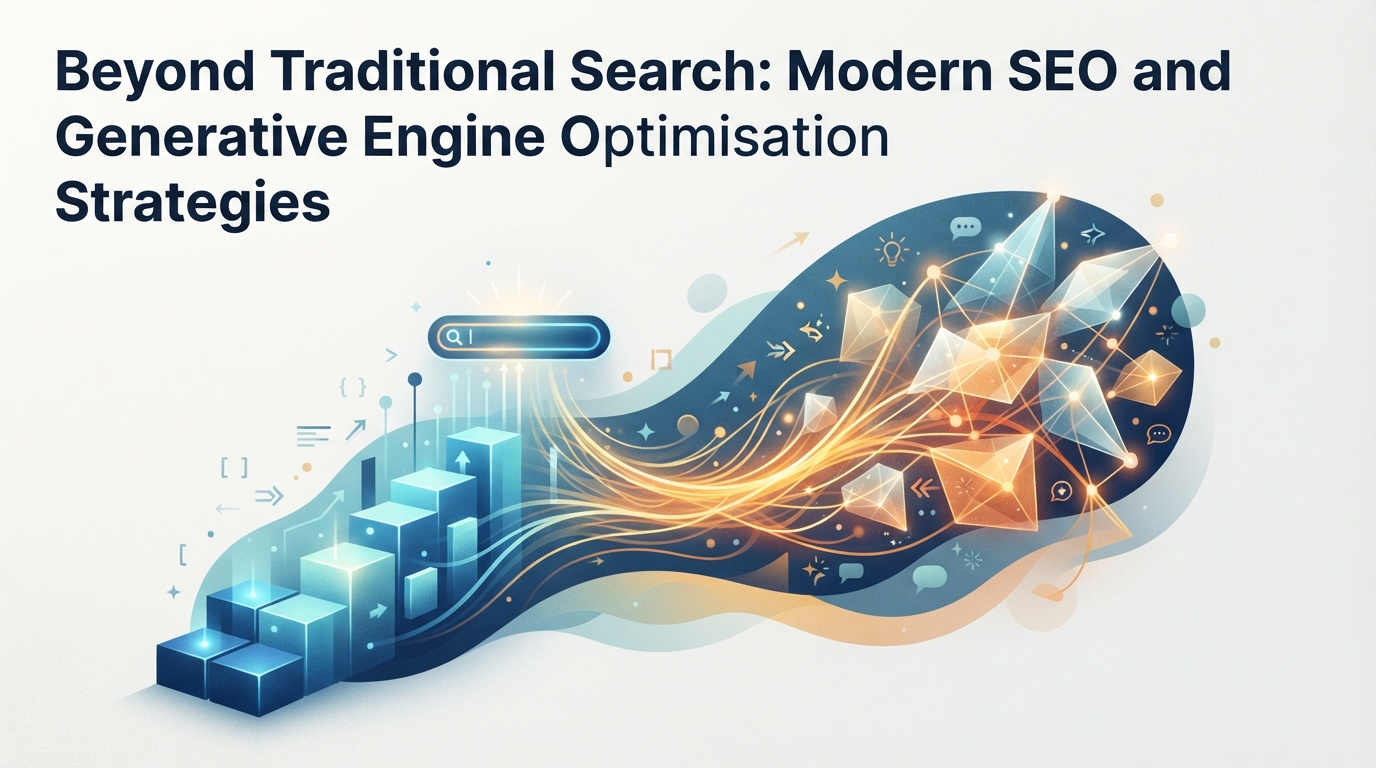
The mechanics of online discovery have shifted fundamentally. For years, securing the top spot on a search engine results page (SERP) relied on a predictable formula of keyword density, backlink acquisition, and technical site hygiene. Today, however, the rise of AI-driven search engines, conversational answer engines, and LLM-powered assistants has redefined how users find information. To remain visible, British businesses must look beyond traditional organic rankings and embrace a dual-track strategy that encompasses both classic search engine optimisation and Generative Engine Optimisation (GEO).
For marketing teams and agencies across the United Kingdom, this shift demands a more sophisticated approach. Relying solely on legacy keywords risks missing out on the growing volume of conversational, zero-click queries handled directly by AI assistants. Navigating this new reality requires intelligent tools that can analyse content relevance, predict how generative engines interpret information, and automate complex workflows. OneClickGrowth offers the comprehensive suite needed to bridge this gap, ensuring your brand remains highly visible across all channels of modern discovery.
1. The Evolution of Search: Why Traditional SEO is Only Half the Story
Traditional search engines operated as digital signposts, directing users to third-party websites based on indexable keywords and domain authority. While this model still drives substantial traffic, it is increasingly supplemented—and in some cases bypassed—by systems that synthesise information directly on the results page. Users no longer merely search for listicles; they ask complex, multi-layered questions and expect structured, synthesised answers in real time. This change in user behaviour has created a dual-search landscape where traditional organic listings sit alongside generative summaries.
Consequently, focusing exclusively on conventional ranking metrics provides an incomplete picture of digital performance. If a brand's content is not structured to be digested and cited by generative engines, it risks becoming invisible to a vast segment of modern searchers. This is particularly critical in the UK market, where consumers expect highly precise, locally relevant answers. To secure future growth, marketing strategies must evolve to target both standard search algorithms and the complex neural networks that power conversational AI systems.
Achieving this balance requires moving away from static keyword stuffing and towards contextual depth. Brands must understand the underlying intent behind queries and present information in a format that satisfies both human readers and machine-learning models. By adopting a comprehensive visibility strategy, businesses can ensure they capture traffic from traditional searchers while securing vital citations in generative answers.
2. Demystifying Generative Engine Optimisation (GEO)
Generative Engine Optimisation, or GEO, is the practice of optimising digital content so that conversational AI platforms, large language models (LLMs), and AI-augmented search engines select and cite your website as a primary source. Unlike traditional search engine optimisation, which prioritises backlink profiles and keyword placement, GEO focuses on content authority, factual accuracy, clear structural hierarchy, and conversational utility. The goal is to make your content the most authoritative and easily referenceable answer to a user's prompt.
To succeed in this arena, brands must adopt specific formatting and linguistic styles that LLMs prefer. This includes utilising clear schema markup, providing direct and unambiguous answers to common questions at the top of pages, and backing up assertions with verified statistics and reliable data points. Generative engines are built to synthesise information; therefore, content that is already well-synthesised, structured, and easy to parse stands a much higher chance of being selected as a trusted citation.
At OneClickGrowth, we have designed our platform around these fundamental GEO principles. By helping brands structure their content to align with the processing patterns of LLMs, we ensure that your business is not just indexed, but actively recommended. This proactive approach to search transforms your website from a passive digital brochure into an active participant in conversational search ecosystems.
3. Conducting an AI-Driven Website Analysis for Modern Visibility
Before implementing any advanced optimisation tactics, businesses must gain a clear, objective understanding of their current digital footprint. Traditional site audits often focus heavily on technical errors, page speed, and broken links. While these elements remain vital for a healthy website, they do not address how effectively your content communicates with generative AI engines. A modern audit must evaluate how easily an LLM can crawl, categorise, and extract value from your written material.
An AI-driven website analysis assesses your digital assets through the lens of semantic search. It looks at the depth of your topical coverage, the clarity of your information architecture, and whether your content provides genuine, original value rather than rehashed information. This analysis identifies where your site succeeds in capturing traditional search intent and where it falls short of meeting the rigorous standards of generative search engines.
OneClickGrowth's AI-driven Website Analysis tool simplifies this complex diagnostic process. By scanning your existing web pages, our platform evaluates your contextual relevance, spots hidden structural weaknesses, and identifies crucial gaps where LLMs might struggle to understand your offering. The result is a highly practical, step-by-step development plan that tells you exactly what to optimise to improve your visibility across both traditional and AI-driven platforms.
4. Bridge the Content Gap: Strategic Content Planning for Traditional and Generative Search
A successful modern digital strategy relies on identifying and bridging the gaps between what your audience is searching for and the content currently available on your site. In the dual-search era, these gaps exist on two levels: traditional search queries that lack high-quality answers, and conversational prompts where generative engines cannot find authoritative local sources to cite. Identifying these gaps manually across hundreds of pages is an incredibly resource-intensive task.
Strategic content planning requires a systematic approach to topical authority. Instead of writing disconnected blog posts around isolated keywords, brands must build comprehensive topic clusters that cover an industry or subject area exhaustively. This method demonstrates deep expertise to traditional search crawlers while providing generative engines with a rich repository of interconnected facts and insights to draw upon.
With OneClickGrowth's Content Strategy Planning features, this complex process becomes highly automated and actionable. Our platform identifies exact content gaps by comparing your website against current search trends and LLM retrieval patterns. It then maps out a structured content plan, recommending specific topics, structural outlines, and formatting styles that satisfy both traditional SEO requirements and the citations needed for generative engine presence.
5. Streamlining Production with Automated Content Ideation and Workflows
Maintaining a highly visible online presence requires a consistent stream of high-quality, authoritative content. However, many marketing teams struggle to balance the need for high-volume publishing with the strict editorial standards required by search engines and LLMs alike. Manual research, brainstorming sessions, and content drafting processes can create bottlenecks that slow down campaign delivery and reduce overall marketing agility.
To overcome these operational challenges, smart businesses are turning to automated content ideation and structured workflow management. Automation does not mean sacrificing the human touch or producing generic copy; rather, it involves using technology to handle the heavy lifting of research, outline generation, and search intent mapping. This allows writers and subject matter experts to focus their energy on adding unique insights, local tone, and authoritative commentary.
OneClickGrowth's Content Ideation and Workflow Automation capabilities are built to resolve these exact pain points. Our platform generates highly relevant content ideas based on real-time market data and identified content gaps. It then creates detailed briefs, structures the editorial workflow, and guides your team through the production process step-by-step. This ensures every piece of content published is highly structured, factual, and optimised for both humans and machines from the very start.
6. Agency Collaboration: Managing Modern Campaigns at Scale
For marketing agencies, the transition to modern SEO and GEO introduces a layer of operational complexity. Managing content strategies, keyword tracking, website audits, and generative citation monitoring across a diverse portfolio of clients can quickly overwhelm account managers. Without centralised tools, agencies often rely on a disconnected array of single-purpose platforms, leading to fragmented data, delayed reporting, and inefficient workflows.
To deliver consistent results in this dynamic environment, agencies require a unified workspace that fosters seamless collaboration and clear reporting. Client transparency is vital; agencies must be able to demonstrate not only traditional organic keyword improvements but also how client brands are performing within generative answer summaries and LLM recommendations.
The OneClickGrowth Agency Partner Management Dashboards are designed specifically to meet these agency needs. Our centralised platform allows agencies to manage multiple client accounts from a single interface, delegate tasks, track content production pipelines, and monitor multidimensional search visibility. By streamlining collaboration and providing automated, client-ready reports, we empower agencies to scale their operations, demonstrate clear ROI, and stay ahead of modern search developments.
7. Measuring Success in the Era of Generative Answers
As the search landscape evolves, traditional key performance indicators (KPIs) like keyword rankings and raw organic click-through rates are no longer sufficient. In an environment where generative engines provide direct answers, a user might obtain all the information they need without ever clicking through to a website. While this 'zero-click' reality might seem challenging, it presents a major opportunity for brands that understand how to measure and monetise brand citations.
To evaluate search performance accurately, businesses must track new metrics. These include share of voice within generative summaries, conversational citation frequency, and sentiment analysis of AI-generated recommendations. A brand that is consistently cited as a trusted source in conversational answers will build immense brand equity and capture highly qualified, high-intent traffic when users do decide to click through.
OneClickGrowth helps businesses make sense of this new measurement paradigm. Our platform tracks how your brand is represented across major generative systems, providing clear insights into your citation share and organic visibility. By combining these modern metrics with traditional organic performance data, we give you a complete, accurate picture of your digital footprint, allowing you to refine your strategy with absolute confidence.
Conclusion
The digital search landscape has transformed, but the path to online visibility remains clear for those who adapt. By combining traditional search engine optimisation with modern Generative Engine Optimisation, businesses can protect their organic traffic and secure a dominant position in the conversational search engines of today and tomorrow. OneClickGrowth provides the exact tools, insights, and automated workflows required to make this transition seamless. Empower your team, streamline your content strategy, and ensure your brand is found wherever your customers are searching. Explore OneClickGrowth today to start your journey toward comprehensive digital visibility.
Frequently Asked Questions
What is the difference between traditional SEO and Generative Engine Optimisation (GEO)?
Traditional SEO focuses on optimising website elements to rank highly in standard search engine results pages (SERPs) using keywords, backlinks, and technical performance. Generative Engine Optimisation (GEO) specifically targets conversational AI platforms and large language models (LLMs), structuring content so these systems can easily parse, select, and cite your website as a trusted source in synthesised answers.
How can I check if my website is ready for conversational search?
Conducting an AI-driven website analysis is the most effective approach. Unlike traditional technical audits, an AI audit evaluates your content’s semantic depth, information structure, and topical authority, identifying areas where conversational models might struggle to index or recommend your services.
Why are zero-click searches becoming more common, and how should brands respond?
Zero-click searches occur when a search engine or AI assistant answers a user's query directly on the page, eliminating the need to click through to a website. Brands should respond by focusing on securing citations within these generative summaries, which establishes high authority and ensures that when a user does need to click for more depth, your business is the recommended choice.